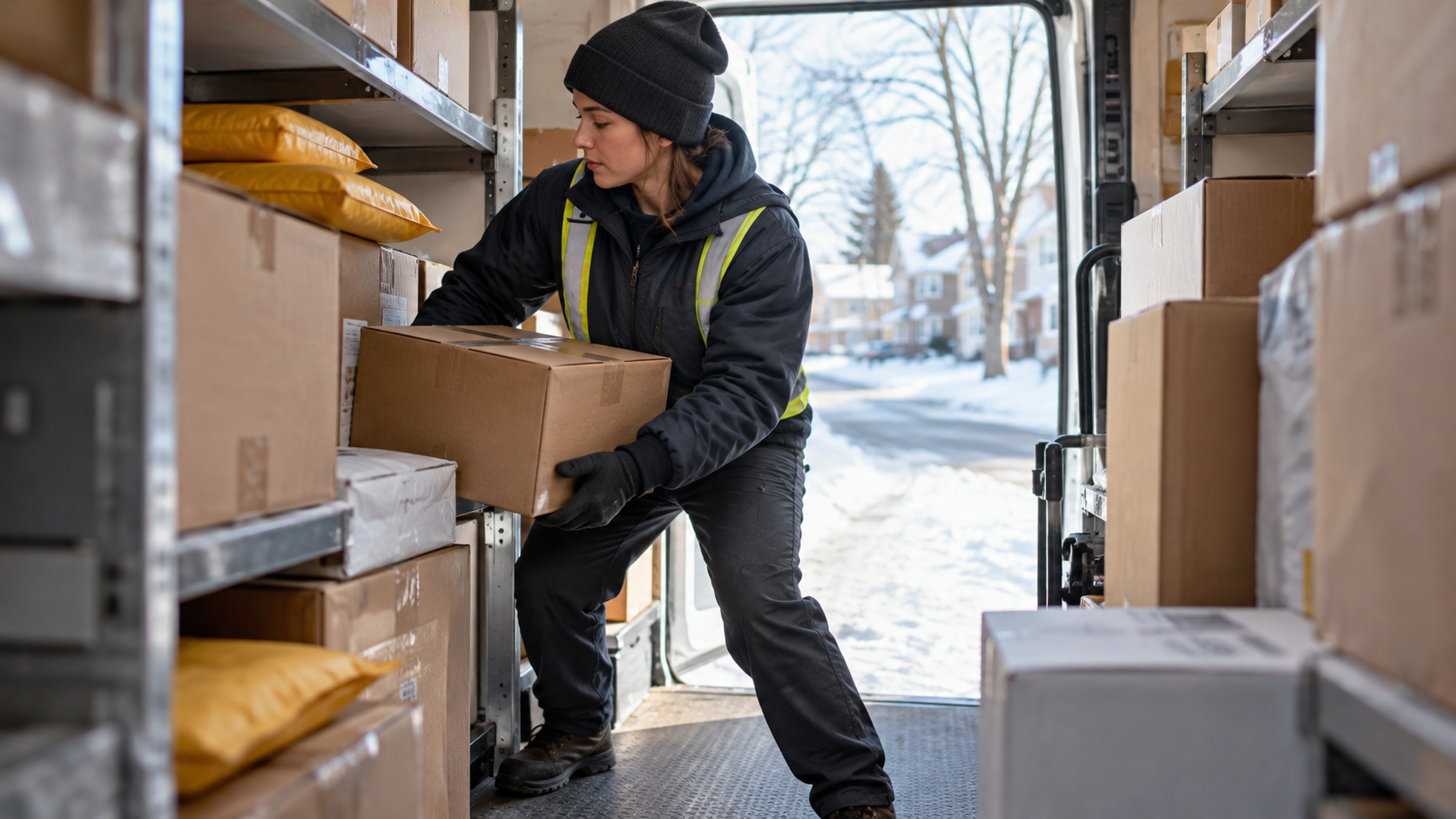
A driver opens the side door and sees the next parcel behind two other packages. The label faces the aisle, but the parcel sits across the driver's body. The tempting move is to plant both feet, reach sideways, pull it free, and turn toward the door in one motion. In a crowded vehicle, that turn can happen while the driver is still holding the parcel away from the body. There may be room to get a hand on the box without room to move it safely.
The decision is where to stand and how to make the turn before taking the weight. A plan to avoid twisting while moving parcels starts with the next package, its path to the door, and a place to turn the feet. It can take longer than grabbing the visible label. It also makes the driver notice when the load or vehicle layout needs a different handling method.
OSHA's materials-handling guidance advises turning by moving the feet rather than twisting the torso while lifting. Its delivery and storage guidance also warns against reaching sideways and lifting while twisting. Those principles apply to the awkward movements a delivery driver may face, but they do not tell the driver the weight of a particular parcel or prove that every van has a safe place to pivot.
Make a crowded delivery van lifting plan
A crowded delivery van lifting plan begins while the parcel is still supported. Identify the item needed for the stop, where it sits, what rests against it, and the route it would take to the door. A label close to the aisle is not enough. The driver needs space for both hands, a stable stance, and a turn that does not pull a load across the waist. Check whether another package blocks the feet or whether loose items would shift as the selected parcel comes out.
Look at the floor and threshold as well as the shelf. A clear hand path can end at a cluttered floor. A parcel that can slide to the edge may still force the driver to step backward over another item while carrying it. Plan where it will rest next: on a stable permitted surface, on an appropriate cart, or in a position from which it can be carried out. Do not create a new trip hazard merely to open a turning space.
Vehicle layout matters. A small aisle may let the driver face a shelf but leave no room to turn with a wide box. A stack near the door may block the only useful foot movement. The useful question is, “Can I face the item, take it securely, move my feet, and set it down along a clear path?” If one answer is no, change the setup before lifting. This is a handling decision about the space at this stop, not a claim that the whole route has been loaded incorrectly.
Turn feet before moving a package
The phrase turn feet before moving a package describes a sequence, not a rigid pose. Face the parcel as directly as the space allows. Put the feet where they can support the movement without standing on another item. Bring the parcel close enough for a secure hold, if it can be moved safely into that position, then turn by stepping or repositioning the feet. Keep the carried parcel on the planned path to the door rather than twisting the upper body toward the exit while the feet remain aimed at the shelf.
This does not require one dramatic pivot. In a tight aisle, a series of small steps may be the available way to change direction. The driver may need to set the item down at a safe intermediate position, move the feet, and take it up again. If the item is too large to set down or the intermediate surface is unstable, that option is unavailable; the driver needs a different handling method or help through the employer's procedure.
NIOSH's ergonomics program guidance gives stepping and turning rather than twisting as a way to reduce a manual-handling risk factor. It does not prescribe the exact steps inside a particular vehicle. The driver's path depends on the parcel, shelf height, floor, doorway, and available equipment. The point is to make the feet and the load travel together instead of asking the back to bridge two directions.
Move obstacles only when that movement is controlled
The package in front may be light, but moving it still changes the load arrangement. Identify a safe, authorized temporary place before shifting it. Keep the labels or route identifiers visible enough to restore the right order. Do not place an item where it can slide into a pedal area, block an exit, or fall when the door opens. A rushed shuffle that clears the selected parcel can make the next stop harder.
Move one obstacle at a time if the vehicle layout permits. Face it, keep a secure hold, and turn the feet toward its new position. Then look again at the selected parcel. Removing the first obstacle may reveal another box bracing it or a strap that should remain in place until the load is stable. Never pull a package out from under a stack and assume the upper items will stay put. The objective is a controlled path for the needed parcel, not simply an empty aisle.
If repositioning items would disturb the secured load, use the employer's loading and securement process. This article does not decide whether a strap can be removed or how oversized freight must be restrained; those are separate load-control questions. It addresses the driver's body position while an allowed parcel movement is made. A supervisor or trained coworker may need to advise on changing the arrangement before the driver handles the item.
Choose a pickup position that fits the vehicle
A parcel at floor level, chest level, or deep on a shelf presents a different reach. The driver should judge the actual package and position before committing to a lift. A deeply placed box may be within arm's reach while still requiring a long pull across the body. OSHA's heavy-lifting eTool discusses ways to bring materials closer instead of reaching into a truck bed. In a delivery vehicle, that principle can mean using approved equipment or changing the loading position through the proper process; it does not mean climbing onto an unstable parcel or improvising a device.
Use a secure handhold that does not depend on a loose flap, torn tape, or a corner about to collapse. If the package is damaged or its contents appear to shift, stop and follow the employer's damaged-package procedure. A driver cannot compensate for an uncertain grip by twisting faster toward the door. The same applies if the package is heavier than expected. Set it back on a stable surface if that can be done safely, then reassess the handling method.
The doorway deserves its own check. A van shelf may offer enough room to lift but not enough space to carry the parcel through the door while keeping it close. Decide whether to face the doorway first, use a stable intermediate position, or ask for an approved aid. Check the ground outside before stepping down. A foot turn inside the vehicle is incomplete if the next step lands on ice, a curb edge, or an unseen package.
Follow one crowded-van example from shelf to door
Suppose the next stop needs a medium box stored behind two smaller parcels. The driver can read its label from the side door, but the box's long edge points across the aisle. Pulling it straight out would put the driver's feet toward the rear and the shoulders toward the door. The driver first identifies where the two smaller parcels can be placed without blocking the doorway or changing an existing restraint.
The first smaller parcel moves to a permitted stable position. The driver steps with it instead of turning at the waist. The second parcel is checked before it moves; if it supports another item, the driver does not remove it until the stack can be managed safely. Once the front space is open, the driver checks the medium box's weight and handholds. The box can be brought toward the aisle with both hands and kept supported while the driver takes small steps toward the exit. At the door, the driver checks the ground and completes the transition using the handling method available for that vehicle.
Change one fact: the box is wedged under a secured heavy item. The “move two parcels” plan no longer works. The driver needs the applicable load-control process, equipment, or help. Change another fact: the aisle is too narrow for the driver's feet to turn with the box. The driver should not declare the same lift safe merely because the label is reachable. An authorized intermediate placement or another method must solve that space problem first.
This example does not establish a universal safe weight, a required number of steps, or a promise that one person can manage every delivery. Its value is the order of decisions: identify the parcel, clear only what can be controlled, verify a stance and path, then move. That order reveals the moment when a rushed pull would otherwise become a twisting lift.
Keep the doorway and ground in the plan
The movement does not end when the parcel reaches the vehicle threshold. A driver may turn the upper body toward the address while one foot stays inside and the other lands outside. If the step down requires a direction change, plan it before carrying the package through the opening. Where possible, set the parcel down safely, descend with a clear view, and then use the approved method to continue. The available method depends on vehicle design and employer training.
Check whether the side door or rear door provides the better route for the specific parcel. The shortest distance may still involve an awkward turn. An open door should be stable and the path outside clear of traffic and pedestrians. Do not stand a parcel where it can fall from the vehicle or obstruct another worker. If weather or parking conditions make the exit unsafe, resolve that condition under the route's safety procedure rather than forcing the lift through it.
The driver should also plan the return. After delivery, an empty hand may make the clutter look less urgent, but the temporary parcels need to go back to authorized positions before travel. The vehicle should not move with items left loose near the doorway because they were set there for a quick retrieval. This article's focus is the parcel-handling turn; any actual securement decision follows the employer's load rules.
Stop when the path cannot be made workable
A driver may reach a point where no safe stance, grip, or turning path is available. That is a decision to stop the handling attempt and report the specific constraint, not an invitation to keep testing the same pull. Name what blocks the movement: “The requested parcel is behind a secured stack, and I cannot turn my feet with it in the aisle.” That description gives the supervisor useful information without claiming a medical diagnosis or guessing at the load's exact weight.
Ask for the approved next step. It may involve a second person, appropriate handling equipment, a controlled rearrangement, or another route decision. Do not assume a cart will fit through the vehicle door or that a coworker is automatically available. The employer's procedure and the actual setting determine which option is workable. If a package shifts, falls, or appears damaged during the attempt, preserve the event and follow the applicable reporting process.
There is a difference between an awkward lift and an injury. If the driver feels pain or has an incident, stop the work and use the employer's injury-response process. The article does not give medical advice. The practical lesson is to notice the unusable path before loading the body with a parcel, and to state the obstacle clearly enough that someone can help choose a different method.
When asking for help, describe the parcel's location and the space available, not just that it is “too hard.” A useful note might say the box is on the rear shelf, another package blocks the standing area, and the driver cannot face the box and turn toward the door while holding it. Mention whether the parcel has already been moved or remains in its original position. That matters because the next person needs to know whether the load arrangement has changed. If the driver has only inspected it, say so plainly.
Wait for a response through the normal route or safety channel before changing a restraint or trying a new lift that creates the same problem. A proposed workaround should solve the blocked stance or path, not merely add another hand to an already unstable move. For example, a second person can help only if both people have room to stand and coordinate under the employer's method. If the available aid would require the driver to climb over parcels or work at the edge of an open doorway, explain that constraint as well. The handoff is complete when there is a workable method for moving this parcel and the load can be left stable afterward.
Use the next stop to improve retrieval order
A crowded vehicle may remain crowded after this parcel leaves. At an appropriate, permitted point, the driver can review whether the next few known parcels can be reached without sideways pulls. Repositioning must stay within load-control rules and should happen while the vehicle is parked, not while driving. Do not reshuffle the whole vehicle on the roadside simply because one retrieval was awkward. Focus on the items that will be handled next and the safe space needed to handle them.
The driver can record a recurring layout issue in concrete terms: route stop, shelf or zone, blocked foot space, and movement that required help or a different method. Avoid a vague note such as “bad load.” Specific observations can support a conversation about the loading sequence, shelf use, or available handling equipment. They also distinguish a one-time misplaced parcel from a pattern that makes the same twisting movement likely at many stops.
This is different from deciding whether the vehicle has enough total capacity for a pickup or how to secure an oversized item. The question here is whether a person can face, hold, turn, and move the next ordinary parcel in the available space. If that question remains unresolved after a layout change, it needs its own handling plan rather than a promise to “be more careful.”
Ask about the work when comparing delivery roles
Drivers considering a role can ask what vehicles, loading layouts, and approved handling aids the employer uses. A posted lifting requirement may describe a range of work without showing how a crowded aisle is managed. The Saint Paul delivery driver Careers hub provides the local career starting point, and the published delivery job-offer review guide helps organize questions before accepting a role. Neither page can replace training for the specific vehicle and load.
On the job, the driver can use a short check before each awkward retrieval: identify the parcel, verify a secure grip, clear a legitimate foot path, face the movement, and decide where the parcel will rest next. If the feet cannot move with the load, pause and change the method. The goal is a workable path through the vehicle for this parcel, followed by a stable load arrangement for the next stop.