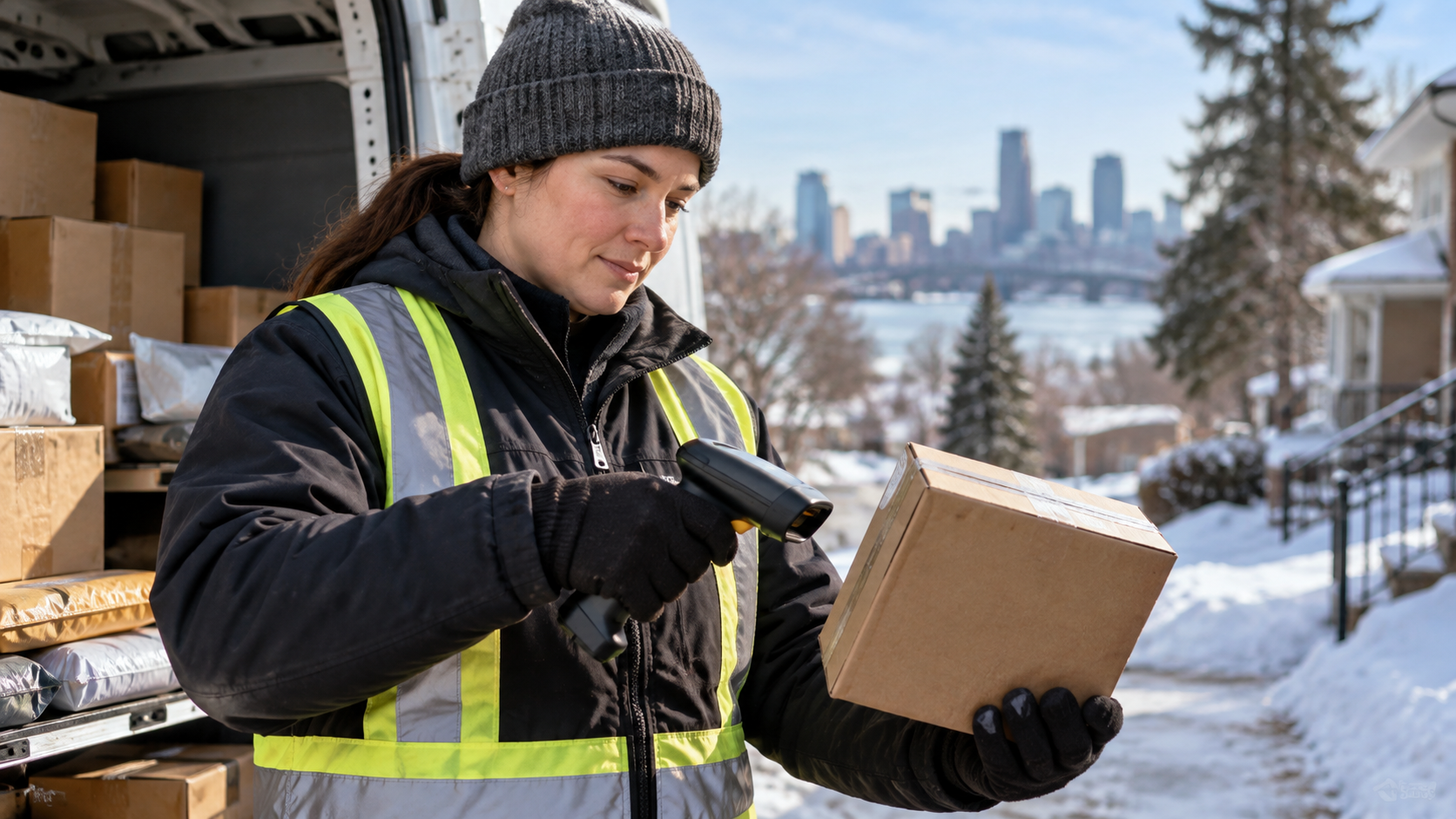
A posting says drivers use handheld scanners. You have scanned packages at pickup and delivery, but you cannot remember the product name—or the new employer names software you have never opened. You can still describe the experience clearly. A Minnesota delivery driver resume handheld scanner line should identify the actual delivery-record steps you performed, such as scanning an item, recording an exception, or confirming handoff. It should not turn familiarity with one device into a claim of proficiency with every route platform.
O*NET lists recording delivered items and recipient responses among courier tasks. That shows why the experience is relevant, but it does not say you used a particular scanner. A résumé is a record of your work, not a translation of the new posting into your past. Name a system when you truly used it; otherwise describe the function and the workflow. A hiring reader can then see transferable experience without being misled about your software history.
Map the delivery scan workflow you performed
Write down your actual delivery scan workflow before drafting a bullet. Did you scan items at loading, pickup, handoff, return, or all four? Did you enter a reason when delivery failed? Did you collect a signature, record a recipient response, or attach a photo through the employer's approved process? These steps are different, and the résumé need not claim every one of them.
For each step, note what the device recorded and what you did next. A driver might scan a package at pickup, verify the displayed stop, and update the status at delivery. Another might only scan at the final handoff while warehouse staff handle the load scan. The second driver should not list “end-to-end package tracking” if they did not handle the other stages.
Check whether you used a dedicated scanner or a phone app. Both can support delivery records, but they are not identical device experience. If you used a company phone with a scanning app, say so. If you used a rugged handheld terminal, name that type. The important truth is what you operated, not whether the device sounds more specialized.
Keep the workflow tied to the employer where you performed it. A scan procedure from a parcel job should not appear under an earlier courier role that used paper signatures. That separation will matter when an interviewer asks about a specific shift.
Separate device use from a scanner software claim
A scanner software claim goes beyond saying you handled a device. It suggests you know a named product's screens, features, or process. If you used only a generic scanner with prompts supplied by your employer, do not claim proficiency in a vendor platform you have merely heard about. “Used handheld devices to record delivery status” is a valid line when it reflects your work.
If you know the product name, verify the spelling and the version or employer context before adding it. A company may customize a vendor's software so your experience covers the driver interface, not administration or configuration. “Used the driver app to confirm parcel handoff and enter exception codes” is more precise than “expert in [platform]” if you never trained others or managed the system.
Distinguish scanning a barcode from interpreting every field in the software. You might have followed a prompt to scan, then contacted dispatch when the item failed validation. That is hands-on operational experience. It is not the same as fixing backend data, assigning routes, or maintaining the database. The résumé should not imply broader technical authority.
If the job posting names a system you have not used, you can show the workflow you know and be ready to learn the new interface. Do not put the posting's product name into your skills list just to pass a keyword filter. A false match can unravel during a simple interview question.
Write a specific handheld-scanner bullet
One structure is action plus stage plus record: “Used a handheld scanner to confirm parcel pickups, record delivery completion, and flag exceptions for follow-up.” Use only the stages you actually handled. If you did not flag exceptions, remove that clause. If the work happened through a phone app rather than a handheld terminal, change the device phrase.
Another version might read, “Scanned assigned deliveries at customer handoff and captured required receipt information in the company device.” That can be useful when the employer values accurate proof of delivery. Do not write “captured signatures” unless you did. Do not add a claim that every delivery was verified if there were exceptions or if the system sometimes operated offline.
Keep the line within the role's scale. A short seasonal assignment can still support a scan-workflow bullet, but it does not prove years of product expertise. Put the bullet under the employer and dates where it happened. If you used two different workflows at two jobs, use distinct bullets rather than repeating a generic “scanner proficient” label.
Read the sentence aloud and ask what an interviewer might ask next. If you can explain a typical scan sequence, an error prompt, and how you followed the employer's procedure, the line probably has a solid base. If you cannot explain the named software, take the name out.
Describe exception handling without inventing control
Scan workflows often include exceptions: a barcode will not read, a package is damaged, a recipient is unavailable, or the device has no connection. Your résumé can describe how you documented and escalated these situations if that was part of your work. It should not claim you repaired the platform or made a customer-service decision outside your authority.
For example, “Recorded delivery exceptions in the assigned device and notified dispatch when a scan could not be completed” identifies two actions. It does not promise that you resolved every exception. If your employer required a manual entry or supervisor approval, name that process accurately. A vague “troubleshot all scanner issues” may imply technical work you did not do.
When an item could not be scanned, what did you actually do? Some drivers entered a permitted code, some called a route desk, and some returned the item for review. Avoid borrowing another employer's procedure. A résumé bullet can remain general enough to cover the real pattern without claiming a specific code or menu you cannot remember.
If you have a documented outcome, such as recognition for accurate records, state its period and source. Without a defensible measure, focus on the actions: recording, checking, and escalating. “100% scan accuracy” is a statistical claim that requires a clear denominator and evidence.
Describe how you checked a mismatched scan
A barcode can fail because the label is damaged, the wrong item was selected, or the device cannot connect. The résumé does not need a technical diagnosis of every failure. It can show your part of the verification: comparing the displayed identifier with the item, stopping before a wrong status is recorded, and following the employer's exception route. Use only the steps you actually performed.
For example, “Checked item identifiers against scanner prompts and escalated mismatches before recording handoff” is a process claim. It does not say you corrected the inventory database. If you were authorized to enter a manual identifier, describe that limited action. If a supervisor had to approve it, do not claim you resolved the mismatch alone.
Avoid treating an accidental duplicate scan as a perfect-accuracy story. If you discovered and corrected one, you can discuss how the correction process worked without putting an unnecessary error narrative in the résumé. The bullet should describe the routine capability the employer needs, not promise that every scan was flawless. In an interview, a truthful example of following the exception process can demonstrate judgment better than a fabricated perfect rate.
Distinguish warehouse scans from driver scans
Some workers scan parcels in a warehouse before the driver receives them. Others scan at loading, pickup, delivery, and return. Those stages may use the same device but represent different responsibilities. If your experience was only sorting inbound packages, a résumé line about customer delivery confirmation would be inaccurate. Name the stage where you actually handled the item.
This distinction is useful when you moved between warehouse and driver work. A bullet under the warehouse role can say you scanned items into assigned route bins, if true. A bullet under the driver role can say you recorded proof of delivery at the destination, if true. Keep the employer and dates with each task. Do not combine them into a single line suggesting you controlled the full package journey if the work was split across teams.
If a new posting asks for handheld-device experience rather than a specific stage, both kinds of scanning may be relevant. State the stage anyway. The employer can judge what transfers to its workflow, while your résumé remains easy to verify. A clear stage label also helps you avoid naming software you used only indirectly through a coworker's screen.
Keep proof of delivery distinct from route navigation
A handheld device may show stops, navigation, status prompts, and proof-of-delivery fields. Using one feature does not mean you used them all. If you scanned package labels and recorded handoff, write that. If a separate phone supplied navigation, do not imply the scanner planned your route. If dispatch changed your stop order, do not claim the device made you a route planner.
Proof of delivery may involve a signature, photo, recipient name, or other employer-defined record. Describe only the method you actually used and avoid publishing customer details in the résumé. “Captured required delivery confirmation in the assigned app” can be enough when the exact data is private or varied by stop.
If a posting asks for route-app proficiency, you may be able to say you followed app-based stop lists and status prompts, provided that is true. That is a different skill from scanning barcodes. Separate the two in an interview, even if they happened on the same device. The distinction helps the new employer judge which parts of its system you would need to learn.
O*NET's courier task description supports recording deliveries as relevant work. The applicant's own experience determines whether the record was created with a scanner, phone, paper form, or another tool.
Use a worked two-device comparison
Imagine a driver at Employer A used a rugged handheld terminal to scan parcels at pickup and handoff. At Employer B, the driver used a phone app to mark completed stops but did not scan a barcode. A truthful résumé can give Employer A a scanner-specific bullet and Employer B a delivery-status-app bullet. Combining both under “advanced scanner systems” would blur the different work.
Suppose Employer A's device sometimes lost signal. The driver followed a documented offline procedure and synchronized the record later, but did not administer the system. The bullet could say, “Recorded parcel handoffs with a handheld scanner and followed the assigned offline procedure when connectivity failed.” It should not say “designed offline synchronization” or “maintained scanner software.”
At Employer B, a bullet might say, “Updated delivery completion and exception status through the company mobile app.” That is relevant to a new scanner-based job because it shows familiarity with electronic delivery records, but it does not claim prior experience with a dedicated scanner. The hiring team can decide how much training is needed.
These employers and workflows are hypothetical. The point is to keep each device, function, and employer together rather than assembling one impressive-sounding technical history from several unrelated tasks.
Match the posting's real technology requirement
Read the new posting for what it actually requires. It may say “comfortable using handheld devices,” “scan packages at each stop,” or name a particular product. The delivery-driver qualification checklist can help identify stated requirements. Match your true workflow to the requirement without upgrading it into unearned product expertise.
If the posting describes barcode scans and delivery confirmation, a bullet about actual pickup and handoff scans is directly relevant. If it asks for inventory-system administration, a driver's normal scan activity may be related but not equivalent. If it names software you have not used, leave the product out and describe the device and process you know.
Use a skills section carefully. “Handheld parcel scanning” can be a useful skill label if you have that experience. A list of three vendor names you cannot explain is weaker than one truthful workflow bullet under a job. The work-history bullet shows context, while the skills line helps a reader find the capability quickly.
Tailoring also means dropping irrelevant details. A role that focuses on courier handoffs may not need a paragraph about warehouse inventory scans. Choose the electronic record work that helps the employer understand your fit and keep the rest for an interview if asked.
Prepare for a practical interview question
An interviewer may ask you to explain what happened from scan to completed delivery status. Use one real example: where you received the item, what identifier you scanned, what the device showed, what confirmation you captured, and how you handled a mismatch. Keep customer information private. You do not need to recite software menus you cannot remember.
If a new employer uses another system, say what you know and what you would need to learn. “I used a handheld scanner for pickup and delivery status at my last job; I have not used your named platform” is direct and credible. Do not mask the gap with “all scanners are the same.” The workflow may transfer while the interface and exception rules differ.
Be ready to clarify whether you used the device daily or only during a short assignment. A résumé line that suggests routine use should reflect routine use. If you trained coworkers or helped with device setup, state exactly what you did, not a broad “technical lead” title unless it was real.
The interview test is useful before sending the résumé. If the bullet creates a question you cannot answer honestly, revise the claim to the part of the workflow you can explain.
Keep a private tool and task record
Save the résumé version submitted to each opening and a private note listing the device, employer, dates, and tasks behind the scanner line. If you are unsure of a product name, leave the name out until you can verify it from a record you are allowed to keep. Do not copy customer delivery data or a proprietary manual into your job-search archive merely to prove device experience.
If devices were shared at the start of a shift, remember which account actions were yours. Signing in, accepting assigned work, and signing out are useful operational habits when they were part of your job. They do not make you the person who configured accounts or maintained the fleet of devices. If a supervisor assigned the device and resolved access problems, keep that boundary in your description. A later employer may ask about login and handoff procedure; you can explain it without claiming administrator experience.
The Saint Paul delivery-driver careers hub may show roles with different technology requirements. You can tailor a true pickup-scan example for one and a delivery-status example for another without changing the underlying experience. Keep the role dates and tool names aligned with the employer where you used them.
A useful handheld-scanner résumé line lets the reader see the device or app, the stage of the delivery, and the record you created. If those facts are accurate, there is no need to name a system you have never operated.