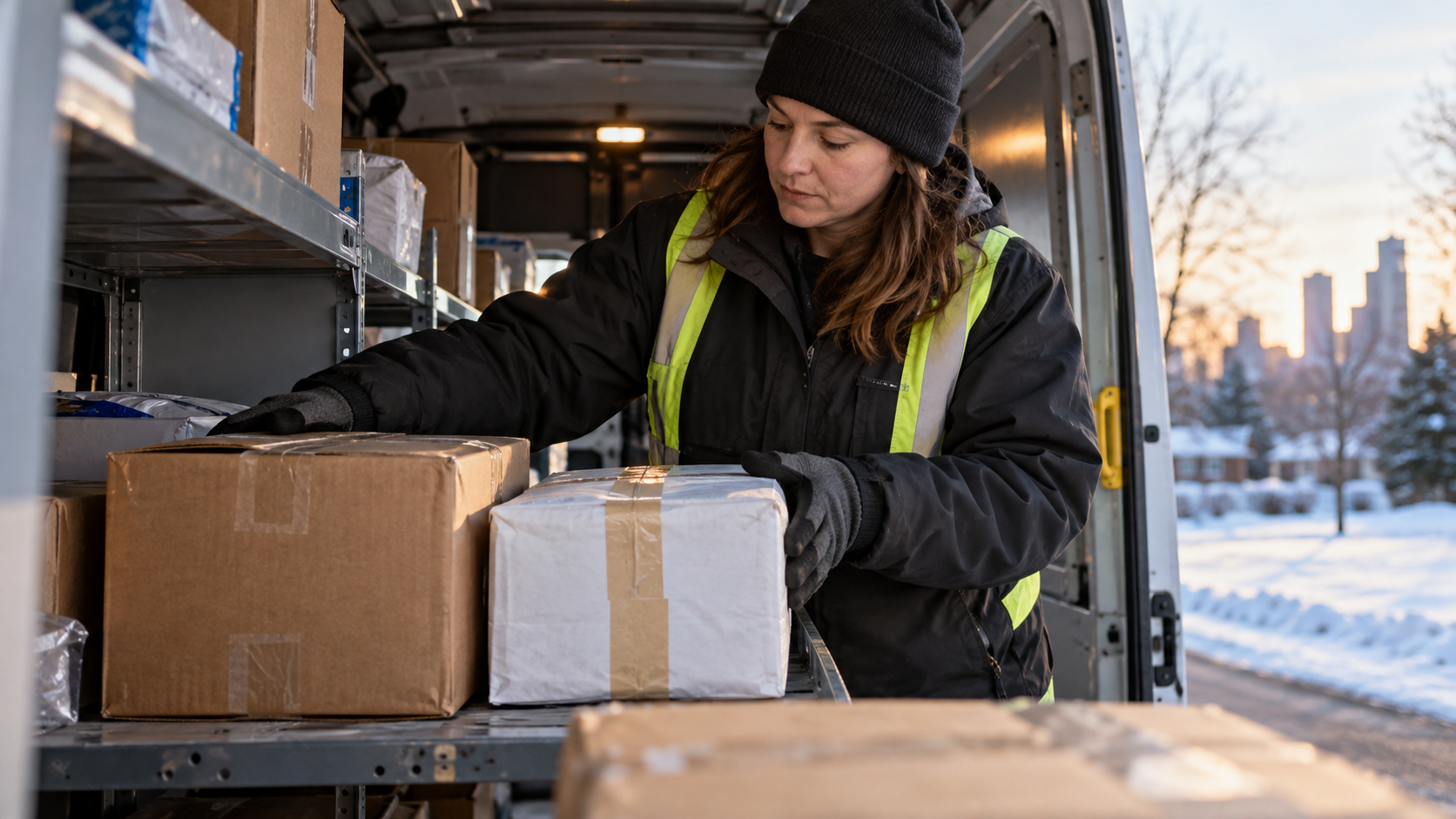
At the end of a route, a driver has two boxes on the same van shelf. One left the station that morning and could not be delivered because the address needed review. The other was accepted from a customer as a prepaid return during an afternoon pickup. Both are coming back to the station, but they entered the driver's custody in opposite ways. A Minnesota delivery driver separate undeliverable and return parcels process keeps each barcode, reason, and next station action attached to the correct box.
The difference is more than a label on a bin. An undeliverable item started as an outbound delivery and needs a truthful attempt or exception history. A newly collected return starts with a sender handoff and pickup acceptance record. The USPS undeliverable-mail guidance addresses a carrier's mail that could not be delivered as addressed, while its Package Pickup FAQ addresses collecting eligible outgoing and return items. Another employer may use different product names, but the two custody paths should not be merged because the van is headed back to one depot.
This article covers staging and handoff across those two streams. It does not decide why a particular package was undeliverable, whether a pickup was authorized, or whether the final route status synced. Those decisions occur in adjacent guides. Here the driver already knows each item's origin and must prevent the station from treating a customer return as a failed delivery, or an undeliverable delivery as a new pickup.
Identify undeliverable package staging by origin
An undeliverable package staging area should hold parcels that were assigned for delivery but remain with the driver after a real exception or failed attempt. Match each barcode to the outbound route and the reason it is coming back. Do not use the same broad “return” note for an address conflict, absent authorized signer, and canceled stop if the employer's system requires distinct reasons. The station may decide reattempt, hold, correction, or return to sender based on that history.
Check whether a parcel was actually attempted. An item held at the depot because its label was unreadable never reached a door. A package brought back after an unanswered signature attempt has a different route event. Keep those histories attached while physically staging both in the outbound-exception stream. A station employee should not have to infer the reason from a scribble on the carton.
If the item is still on an active route card, tell dispatch before closing the shift. The physical package may be on the return shelf, but the app may still expect delivery. Preserve the original exception and station intake event; do not create a customer return scan to remove it from the route. The wrong stream can make later tracking appear to start a new shipment rather than continue the outbound one.
Use the employer's designated tote, shelf, or divider. Do not attach a generic “return” sticker that covers the shipping label unless the station's process directs it. The original barcode remains the anchor for the failed delivery and next action.
Identify newly collected return parcels by pickup evidence
The newly collected return parcels stream should have an acceptance record from the sender or authorized pickup point. Match their labels to the pickup task, time, and actual item count. These parcels were not on the driver's morning outbound route, even if their destination is the same merchant that shipped an undeliverable package. The first carrier custody event is the pickup, not an attempted customer delivery.
Keep the pickup receipt or event reference with the item under policy. A station worker may need to know whether a box was scanned, accepted offline, or transferred under a label-on-arrival process. Do not describe an item as collected if it was merely offered and left with the sender. A phantom return in the van count can obscure an actual missing parcel elsewhere.
Check for old labels on reused cartons. A customer return may carry an earlier outbound barcode beside a new return label. The active return ID should be verified at pickup and remain visible for station intake. Do not let a station scan the old outbound label and classify the box as an undeliverable delivery. Follow the employer's label-handling rule; do not peel or obscure labels on your own to simplify the load.
If a pickup label is missing or unclear, keep the item out of the accepted-return stream until the authorized identification and custody path is established. An unlabeled box placed among verified returns can lose its sender, destination, and claim history. The pickup task itself may be valid, but the physical item still needs its own accepted identity.
Use physical separation that matches the digital record
Put outbound exceptions and newly collected returns in distinct designated areas when the vehicle and employer layout permit. A divider, separate tote, shelf section, or labeled cart can help. Do not improvise a stack that blocks access, exceeds capacity, or damages parcels. The physical separation should make the item-level scan list easier to reconcile; it is not a substitute for scans and receipts.
Within each stream, keep package identifiers visible. A driver who must unload 20 parcels at the station should be able to match each to the correct intake process without sorting by guesswork in a crowded dock. If the van has limited room, use the employer's approved load plan and record any unavoidable mixed tote with a manifest. A mixed container must have item-level entries that tell station staff which barcode belongs to which stream.
Do not use customer names or merchant logos as the sorting rule. Two packages for the same retailer can have different origins and required actions. A returned product may go to a processing center; an undeliverable shipment may need address review or reattempt. The barcode and event history determine the stream, not the brand on the carton.
Handle damaged or leaking items under the safety procedure before ordinary staging. A potential hazard should not be placed in either routine tote simply because its origin is known. Record the condition and follow the employer's isolation and response instructions. Once safe handling is determined, the original delivery or pickup identity still matters to its later disposition.
Keep two inventories during the route
A simple two-column count helps: outbound exceptions retained, and new pickups accepted. Each item needs a barcode or approved temporary identity. Update the counts when a package moves between vehicle, customer, station, or another driver. A route summary may show completed stops but not every parcel left in the van. The physical count at shift end should match the two streams' event lists.
If a delivery stop contains multiple pieces, only the undelivered barcode belongs in the outbound-exception count. The pieces successfully handed to a recipient stay delivered. If a pickup offers three packages but the driver accepts only two, only those two belong in the new-return count. The third remains with the sender and should appear in a partial or unresolved pickup record, not on the van inventory.
Do not net the two counts against each other. Taking five customer returns while bringing back five undeliverable packages does not mean the van's overall count is unchanged in a way that proves anything. The 10 individual barcodes and their different entry events matter. A balancing total can hide one missing outbound item and one extra pickup.
When dispatch transfers an outbound exception to another driver for reattempt, remove it from the original driver's physical count only after a real handoff. When a new return is moved to another van, document that transfer separately. A remote route update does not move cardboard between vehicles.
Give station intake the right stream for each item
At the station, follow the separate intake paths the employer uses. An outbound exception may go to a hold or reattempt area with its original route reason. A newly collected return may enter an outbound processing stream under its return label. Handing both to one worker can be fine if that worker scans and sorts each correctly. The driver should verify the barcodes and receipts, not assume one cart or one worker means one transaction type.
The station receipt should identify the item and custody transfer. A tote count alone may not show that Box A was an undeliverable shipment while Box B was a customer return. If the station uses batch intake, inspect the batch list before leaving. Ask for a correction when one barcode is absent or classified under the wrong stream.
If the intake scanner suggests a status inconsistent with the parcel's origin, pause. A newly collected return should not inherit a customer-unavailable code. An undeliverable outbound item should not be accepted as a fresh customer return under a different tracking number without an authorized relabel. Preserve the before-state and ask the station or support team for the proper reconciliation path.
After station acceptance, compare the van's remaining load with the recorded items. A package left on the floor after both intake lists were closed is an unresolved custody item, not a harmless leftover. Identify it before the vehicle is handed to the next driver.
Read label direction without relying on appearance
Outbound deliveries and customer returns can each display the same merchant name, but the label's destination and service fields may point in different directions. Check the barcode in the approved app and the associated task. A parcel headed to a customer under the morning route remains an outbound item even after a failed attempt. A box collected from a customer under a return task begins a new carrier movement. The driver should not sort only by whether the label says “return,” because a carrier return-to-sender instruction on an undeliverable outbound parcel may use that word too.
Keep original and new tracking IDs separate. A customer return may have a new return label beside an old outbound one. An undeliverable parcel may retain only its original outbound ID while station staff later create another label. Record the identity active at the event you witnessed. Do not convert a package from one stream to another by scanning whichever barcode is easiest to reach. A wrong barcode at intake can start a false shipment history and leave the real route item unresolved.
If the label is torn, smudged, or duplicated, use the employer's identification process before placing the item in either routine stream. A guessed classification can contaminate both counts. Note the physical location and what is known about the prior handoff. The station may use an event history or approved relabeling process to restore identity. A temporary marker can help staff locate the item only if the employer authorizes it and it does not cover the surviving barcode.
The driver should be able to explain why each item is in its assigned area in one sentence: “loaded for delivery, exception at Unit 312, returning to station,” or “accepted from Unit 504 at 3:10 under pickup task 91.” That short provenance is more reliable than a vague “returns” pile when two workflows meet at the same dock.
Keep stream changes tied to actual custody events
An outbound parcel can later enter a sender-return process, but it does not become a newly collected customer return. Its history still begins with the original outbound shipment and failed or canceled delivery. Station staff may create a return leg after intake. The driver's route record should stop at the physical handoff to station and preserve the exception that caused it. Do not backfill a pickup event at the customer's address when no customer offered the item.
A newly collected return may be rejected at station because its label is invalid or its condition requires review. That does not turn it into an undeliverable customer delivery. The driver should preserve the pickup acceptance and station refusal, then ask which team owns the item. If the station does not accept custody, the parcel may remain with the driver or move to a controlled hold area only through a recorded transfer. Do not leave it among outbound exceptions to make the van empty.
Route changes can complicate the picture. Dispatch may instruct a driver to carry an undeliverable item to another depot, or to hand a newly collected return to a linehaul driver. Those are later custody transfers within each item's own stream. Record the destination and receiving party without rewriting the original entry event. A parcel can travel through several hands while its origin remains the same.
A combined station cart can be used if the employer's intake process supports mixed items and item-level sorting. The driver should confirm which barcodes were accepted into each stream. If the scanner shows an unexpected classification, pause and preserve the attempted event before rescanning. A physical cart is a location, not a category; the digital history must still identify the correct workflow.
Work through a same-retailer, different-origin example
Imagine a driver starts with a parcel from Merchant M for Apartment 312. The unit number proves incomplete, so the employer directs a station hold before any valid attempt. Later, the driver collects a prepaid return from Apartment 504 addressed to Merchant M. The cartons look similar. The first keeps its original outbound barcode and address-resolution case. The second has a new return barcode and a pickup acceptance receipt. Both travel back in the van in separate designated areas.
At station intake, the first parcel goes to the outbound exception or address-review process. The second goes to the customer-return process. The station scans each ID under the correct stream. A note saying “two Merchant M returns” would be misleading: one is still an outbound delivery problem, while the other is a newly collected return shipment.
Change one fact: the newly collected return box still bears the old outbound label from its original delivery. The driver verifies the active return label at pickup and follows the employer's label rules. At intake, the station should scan the return ID, not the old delivery ID. If the active label is not ready, the driver uses the pickup's label-not-ready process rather than mixing the box into accepted returns.
Change another fact: the outbound exception is reallocated to another driver mid-route, and that driver physically takes it. Record the driver-to-driver transfer and remove that barcode from the first van's station-return list. The customer return remains in the first van. The two stream counts now change for different reasons, and station intake should expect only the return from this driver.
Check the final custody and route records
After intake, the original driver should no longer be listed as custodian of either parcel. The undeliverable item should retain its outbound exception history and current station location. The newly collected return should retain its pickup acceptance and onward processing identity. If a route card remains active for the first item or the second lacks an acceptance event, report the exact discrepancy with each barcode's receipt.
Customer-facing tracking may use broad language, but internal records should not erase provenance. “Returned to station” for the undeliverable parcel is not the same as “return shipment accepted” from a customer. A later return to sender, reattempt, or merchant receipt will be a separate event. The driver should not claim those future outcomes at shift end.
For drivers comparing employers, the published delivery job-offer review guide can prompt questions about mixed delivery and pickup routes. The Saint Paul delivery driver Careers hub gives local role context. During onboarding, ask where outbound exceptions and new returns are staged and how station intake distinguishes them.
The two streams can share a vehicle without sharing a history. Keep each parcel's origin, barcode, custody handoff, and next station process clear, and the station can move it forward without mistaking a failed delivery for a newly collected return.